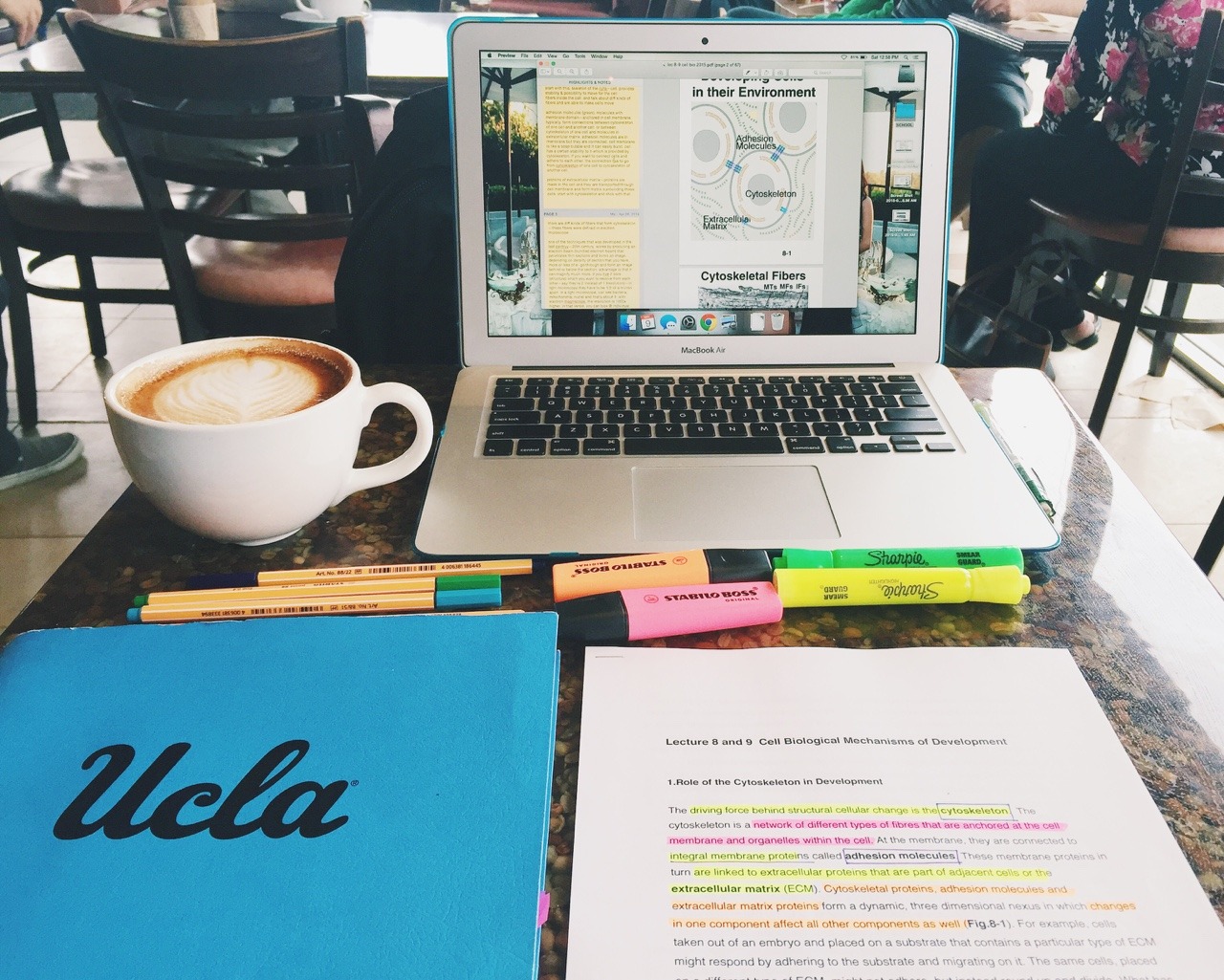
I am currently taking my psychology A2, having got an A in AS. I am aiming for an A* and having got that grade in my official mocks, I’ve been asked to make a post about how I study for this subject! Some of the information here is subject specific but most of it can be applied to other subjects).
I can’t say this post will be as pretty as some of the other posts I see in the studyblr community, but I’ll do my best to be helpful…
Tip 1- Make detailed notes that make sense to you
Remember that your notes do not need to act as a textbook. They are there to help you understand everything. I think that in the studyblr community, it sometimes feels that notes need to be neatly written and completely coherent to other people. They don’t. If that is the form of note-taking that works for you, then that’s great. But understanding the concepts, studies and research methods has to be the priority: YOU DO NOT NEED TO MEMORISE ANYTHING AT THIS STAGE. That’s a job for after class…
Tip 2- Make your revision materials as soon after class as possible
This is a lesson I learned the hard way in AS. I didn’t make my revision materials as I went along and by the time it got to April, I was panicking. After a lesson, I like to make colour-coded flashcards to record the important information and studies.
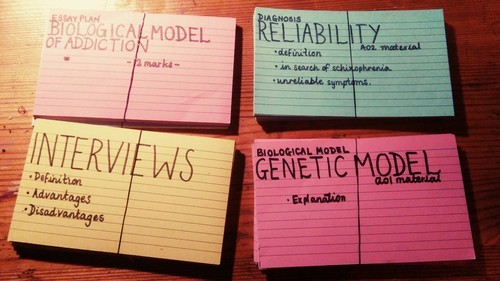
As soon as I’ve learned all of the information required for an essay, I like to make flashcards summarising each of the paragraphs. I try to use as few words as possible- I like to keep these in my visual memory so that I can spend as little time planning as possible in the exam itself.
Also- smell code your flashcards. Scent is the most evocative sense, so make the most of it! I use a different scent for each exam and then wear that scent on the day of the exam. Just do it. Trust me.
Once you have made the flashcards, remember to use them!
Tip 3- Read around the subject while you have time
Of course, this helps a lot to just gain a general understanding. I understand that once school is going on, it can be difficult to find the time for these things. So this is a job for weekends or the holidays so far as I’m concerned. Borrow books from libraries or friends. Buy them second-hand at justbooks., or just new if you have the money for that sort of things (unfortunately I do not). Also, I find that psychologytoday is an excellent resource for reading around the subject online.
Even if you read about things that aren’t strictly relevant to your exam topics, it’s an excellent way to gain understanding of the way that psychologists write, think and investigate new theories. It also wins you brownie points with your teachers.
Equally, I would recommend the magazine ‘Psychology review’, especially if you are studying with the exam board AQA, because it contains lots of relevant information for this specification.
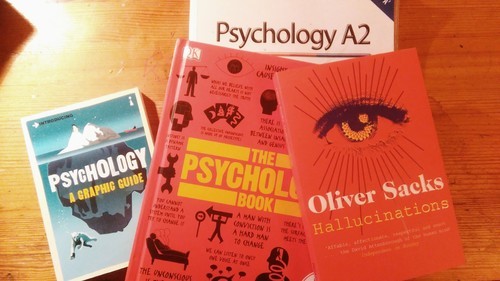
Pictured are a few of my favourite psychology-related books (plus my textbook). I also love love love the book ‘What is madness’ by Darian Leader, (not pictured because I recently lent it to a friend) which is great for the AS topic of ‘abnormality’ and any of the mental disorders discussed at A2.
~side note, ‘What is Madness’ is also interesting if you’re studying ‘psychology of religion’ as a module in philosophy and ethics~
Tip 4- Surround yourself with the knowledge you want to absorb
Of course- like most of my tips, this is geared towards visual learners. I am a big believer in revision posters. It turns my room into a positive studying environment, adds colour to my walls and really helps to keep me motivated! It also does wonders for my recall because I can visualise my walls if I’m ever stuck.
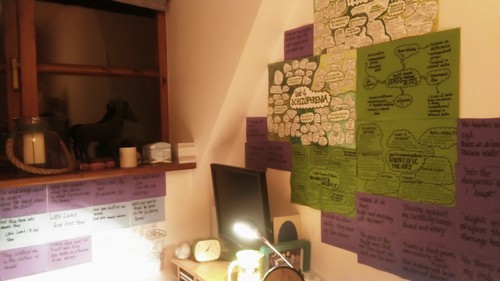
This is my study corner at the moment (featuring quotes I need to know for English and poor lighting). I haven’t finished learning all of the material for this year yet but I am sure my study corner will expand before my exams in June…
Tip 5- Make the most of what is available to you
I don’t know what the psychology departments are like elsewhere, but the teachers at my school are great. They make booklets summarising information from each of our modules and these act as alternative revision guides (which is especially great when I can’t deal with lugging my massive text book around all day).
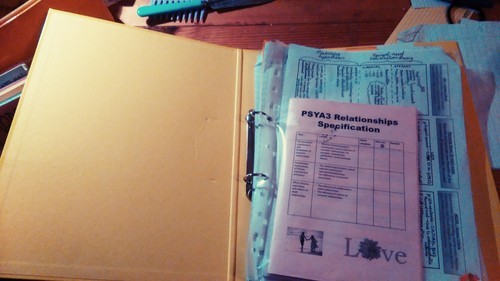
Print out and colour code the specification if you can- know your strengths, weaknesses and the mark scheme (these will be available on the website of your exam board). It’s also a good idea to have a look at the examiner’s reports for each year and use other available information such as…
Tip 6- Doing past papers under timed conditions
This tip is fairly self explanatory. Do the essays under the time stress. Practice your balancing of analysis and evaluation, practice remembering your essay plans without any prompts.
If you can get your teacher to mark them, that’s awesome, but if not, call up the mark scheme and assess yourself. Work out your strengths, the areas you need to improve and then formulate some measurable and attainable targets.
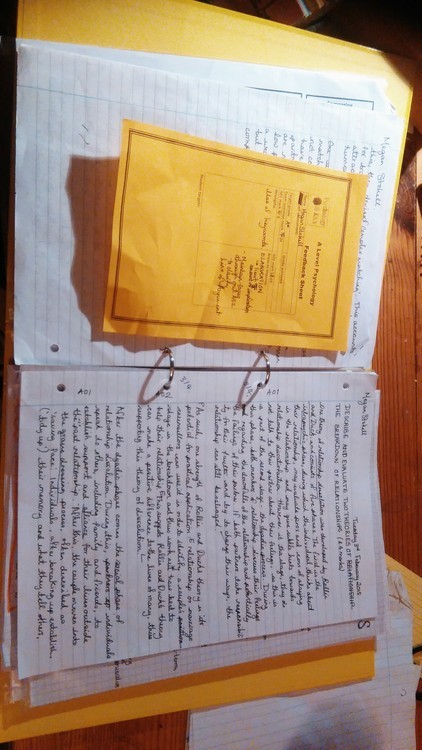
Bonus tip: do not go overboard on this one. I did this as AS and got repetitive strain injury in my wrist from writing too much. I then had to do all of my AS exams on a laptop in a room alone, which I hated.
Tip 7- Before the exam…
Teach your material to other people. I am blessed to have a very patient mum and we take the dog out for ‘revision walks’. I like to do this the evening before an exam because it reassures me that I know the material, whilst making sure I get out of the house and do not spend too much time alone with my own anxiety.
Relax. Face masks, hair masks, skype a friend, whatever you need. (Fun fact: my mum went to university at Cambridge and had a tutor that would send her and others on her course out punting the day before a big exam. He said that any cramming would be detrimental at this stage and I’m inclined to agree.)
On the day, read your posters or any condensed notes you may have. Don’t go with the flashcards right before the exam- if you have a mind-block, this can definitely send you into a panicky downward spiral before you go in.
Good luck lovelies!
BY : studyingwithfarydust on Tumblr